
More than 178 million Americans have lost at least one natural tooth. If you’re part of that statistic, you’re already aware of how tooth loss can negatively impact your day-to-day life. Not only can it make you insecure about your smile, but eating, speaking, and maintaining good oral health can become difficult. Traditional solutions for missing teeth like dentures and dental bridges certainly look lifelike, but they don’t solve the underlying problems of long-term tooth loss like dental implants do. At Texas Dentistry & Braces, we can restore your smile with dental implants in Kaufman. Call us today to learn more about this state-of-the-art tooth replacement!

Whether you have lost just a single tooth or several, dental implants let you regain a full set of teeth so that you no longer feel like something is missing. Dental implants are small titanium posts inserted into the jawbone. Because titanium is biocompatible, the posts encourage the jawbone to grow around them until they are completely embedded. Once this process is complete, dental implants provide a firm and long-lasting anchor for any number of replacement teeth.

Placing dental implants is a significantly more complicated process than fitting a patient with traditional restorations like dentures and bridges, but these advanced prosthetic appliances offer a wide range of incredible benefits that make them well worth the time and effort. At Texas Dentistry and Braces, we partner with the best oral surgeons in the area so we can provide our patients with beautiful and functional dental implants that can keep their smiles in great shape for decades if they receive excellent care. Here’s a quick look at how implants are placed, but please feel free to contact our office in Kaufman if you’d like to know more.

The process of placing dental implants begins with a consultation at our Kaufman office. During this meeting, Dr. Tran will thoroughly evaluate your oral health and medical history to determine the best way to replace your lost teeth. If dental implants are right for you, you may need to receive preliminary procedures like gum disease therapy at our practice before the devices can be placed. If you need specialized treatments like bone grafts before you can qualify for implants, we’ll be happy to refer you to an appropriate specialist.
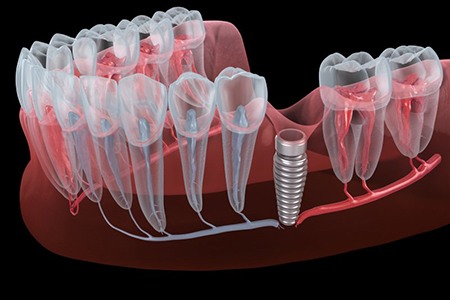
We’ll be sure to refer you to one of the best oral surgeons in the area for your dental implant placement surgery. This painless procedure begins with the patient receiving a suitable anesthetic to ensure their comfort, and they may receive dental sedation if they need a little more help remaining still and calm. Then, your oral surgeon will make a small incision in your gum tissue, insert the dental implant into your jawbone, close your gums around the device, and place a protective cap on it. You’ll also receive detailed aftercare instructions to help ensure a speedy and complication-free healing process.
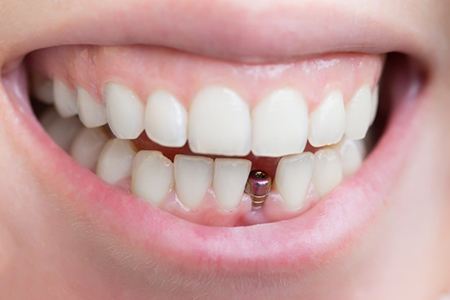
Osseointegration is the natural process through which the titanium of your dental implants will fuse with the bone structure of your jaw, and it will take several months to complete. When your implants have thoroughly bonded with your jawbone, you’ll be ready to receive abutment pieces that are necessary to anchor your restorations in place through a minor surgical procedure. You’ll be ready to receive your restorations a few weeks later.
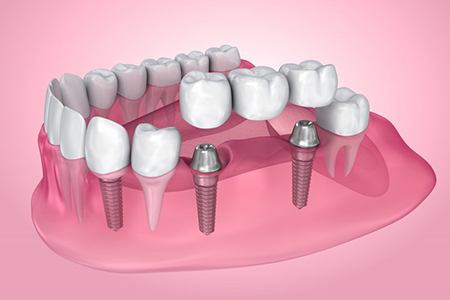
When you are done healing after receiving your abutments, we’ll be happy to fix your customized restoration in place within your mouth. After we check your device for bite and fit and make any final adjustments, you’ll be ready to start showing off your gorgeous new smile.

Because dental implants replace the roots of teeth and not solely the visible crowns, you’re fully replacing the tooth, which means you are taking the necessary steps to restore all of your smile’s basic functions and your overall appearance. For example, chewing your favorite foods is possible as well as retaining your jaw’s natural shape. Those with tooth loss experience accelerated facial sagging due to reduced bone stimulation and loss, but dental implants improve bone stimulation and allow blood flow to continue.
On top of restoring your smile’s functions and appearance, dental implants have been proven to be long-lasting, especially more so compared to other tooth replacements. Dental implants generally last between 25 years and a lifetime, but most people can keep them for life when they practice proper daily oral care. When placed by a professional, their success rates are as high as 98 percent! Furthermore, they don’t require modification of neighboring teeth like traditional bridges, meaning you can retain more of your smile’s natural structure.

Implant dentistry is certainly a popular choice, but as a surgical procedure, your dentist needs to be sure that they are right for you. To do this, you will need to undergo a dental or radiographic examination, and the dentist will go over your health history. This allows your specific needs to be dealt with in full- you may be referred to an oral surgeon at this point as well. These consultations also allow you to ask any questions or express your concerns about the process- we want you to feel as comfortable as possible, and will take the time to talk you through things so that you fully understand how the procedure will work.
To replace a single tooth, a titanium implant is placed directly into the jaw and allowed to heal for several months. Once the biocompatible post has integrated with your bone tissue, we’ll attach an abutment so that a restoration can be reliably anchored. Our restorations are made from porcelain in order to ensure the most natural esthetics possible.
To replace multiple consecutive teeth, a pair of dental implants are placed in the gap in your smile, then restored with an implant bridge. Keep in mind that traditional bridges use modified teeth nearby to hold restorations, but dental implants are strong enough to hold both a three- or four-crown bridge entirely on their own.
Even if you are missing several teeth on opposing sides of your mouth or all the teeth in your top or bottom arch, an implant denture can easily restore your smile to its fullest! Both full and partial dentures can be created to look incredibly natural, provide a more stable denture, and remove the need for adhesives or metal hooks to stay in place.

Every patient’s dental implant process is unique, which means there is no flat cost for treatment. However, it’s important to note that you truly get what you pay for when it comes to your tooth replacement. What you pay will largely depend on factors we’ll determine during your initial consultation. In most cases, you can expect your costs to be most influenced by the following.

The initial consultation is intended to inform our team of your dental needs. For example, we’ll confirm if you need to have preparatory treatments completed to protect the longevity of the implant posts. This includes bone grafting, a treatment that expands the amount of available bone tissue inside the jaw due to deterioration. Additionally, the cost of surgery can fluctuate depending on how many implants must be placed. Because we partner with oral surgeons outside the office, the surgical fee you pay will be separate from the other phases of your care.

The more implants you need to replace missing teeth, the more your treatment will cost. This is because more materials will be required for the posts (which in most cases are made of medical-grade titanium). Much like different models of cars or other items, some last longer or work better than others. If you’d like to learn more about the manufacturers or materials our trusted oral surgeons work with, please let them know and they’ll be happy to explain why they use the products they do.

Different restorations hold different price tags depending on how complex they are. Single crowns needed to cover individual crowns will cost much less compared to a complex implant bridge or denture designed to attach to a series of implants placed throughout the jaw. Not only are more materials needed, but so is more time and labor to ensure the best-looking and most accurate restoration possible. You can expect your tooth replacement to look incredibly lifelike after it’s attached.

In most cases, dental insurance won’t provide coverage for dental implants. If there are any exceptions, it’s for specific phases of care (such as the restorations that cover the implants). Even if there is coverage provided, it will typically be at a specific percentage based on your provider’s plan. Our team members will gladly review your plan in detail on your behalf to ensure you’re getting the most out of your benefits.

Other financial options are worth considering for dental implants if you do not have dental insurance or find it too expensive to cover out of pocket. One popular option is CareCredit, which enables you to pay for treatments over the span of several months in more manageable installments. Plus, these payments often come with little to no interest attached!
Alternatively, you can sign up for our in-house membership plan, which is complete with discounts on services performed in-house and a guaranteed list of preventive treatments you can expect to pay on that plan.
There are several reasons dental implants are considered the gold standard in tooth replacement, including that they are long-lasting. While traditional dental bridges and dentures typically last for 5-15 years, dental implants can last for 30+. The key is breaking harmful habits, like smoking, while implementing healthy ones, such as brushing your teeth for two full minutes each morning and night.
Although dental implant failure is rare, it can happen. Usually, it’s due to one of two things: peri-implantitis (a form of gum disease) or failed osseointegration (when the jawbone and dental implant don’t fuse properly). To help prevent either from happening, we will share helpful instructions throughout the entire process, including what to eat and how to take care of your smile.
We typically recommend taking a day or two off work following the procedure. However, that isn’t always necessary. For instance, if you work an office job and schedule your appointment on a Friday afternoon, then you may feel well enough to return to work on Monday morning.
Since most people’s jaws don’t fully develop until the mid-20s, dental implants typically aren’t an option until then. With that said, you shouldn’t hesitate to schedule an appointment at our office if your child or teen is struggling with tooth loss. That way, we can review their dental history, complete a comprehensive oral exam, and determine if we can restore the appearance of their smile and the strength of their bite with either a dental bridge or a denture.
Unlike your natural teeth, dental implants cannot decay. Of course, that doesn’t mean that you don’t need to care for them. Quite the opposite since peri-implantitis is one of the leading causes of failure! So, if you want yours to last, you need to commit to a solid at-home oral hygiene regimen, eat healthy, well-balanced meals, and schedule a dental checkup and cleaning twice a year.
Sometimes, patients experience a bit of sticker shock when they are given an estimate of the price of dental implants. However, it’s important to know that many dental insurance providers cover a portion of the cost. Plus, if you are uninsured, there are a few other ways you can save, including signing up for our in-house membership plan or CareCredit flexible financing! If you are interested in learning more on the topic of how you can make dental implants in Kaufman affordable, get in touch with our team.
I Need a Checkup & Cleaning I am Looking for a Dentist for My Child I Want to Enhance My Smile I Need Immediate/Emergency Help I Have a Cavity or Broken Tooth I am Missing One or More Teeth I Would Like a Straighter Smile I am Nervous/Afraid of the Dentist I am Concerned About Bleeding Gums I Need My Wisdom Teeth Removed View Our Services